Product
Who We Serve
Resources
LearnIdeas and answers
BlogArticles and practical guidance
Knowledge BaseProduct help and how-tos
Compare CRMsExplore the differences








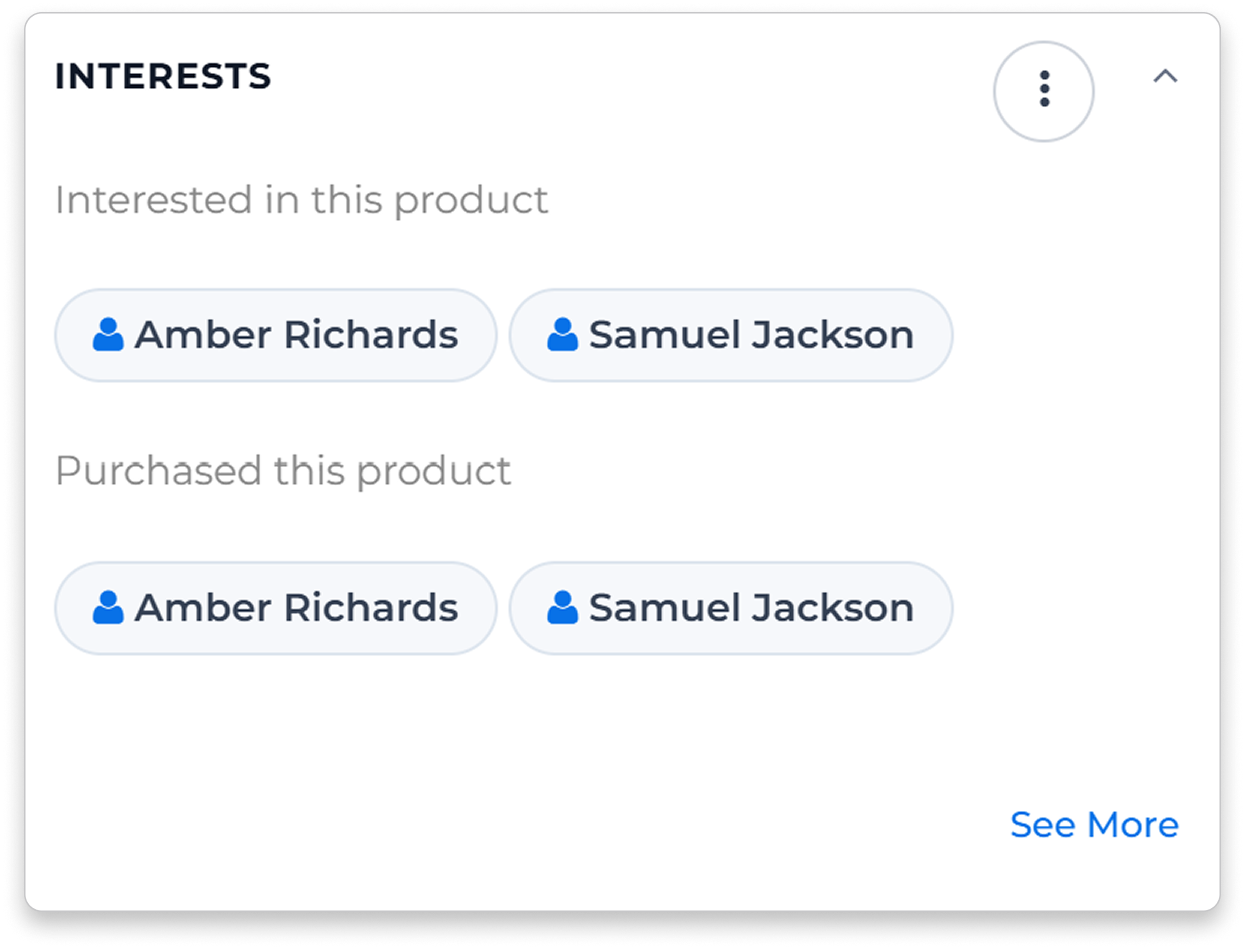


Find contacts linked to the product through recorded interest.
See who purchased the product or a related item before.
Include customers who received or requested a quote but did not buy at the time.
Review product, pack size and pricing unit before comparing offers.
Use recorded offer prices to judge whether a new quoted price is competitive.
Return to the source offer and its details when a buyer asks for terms.

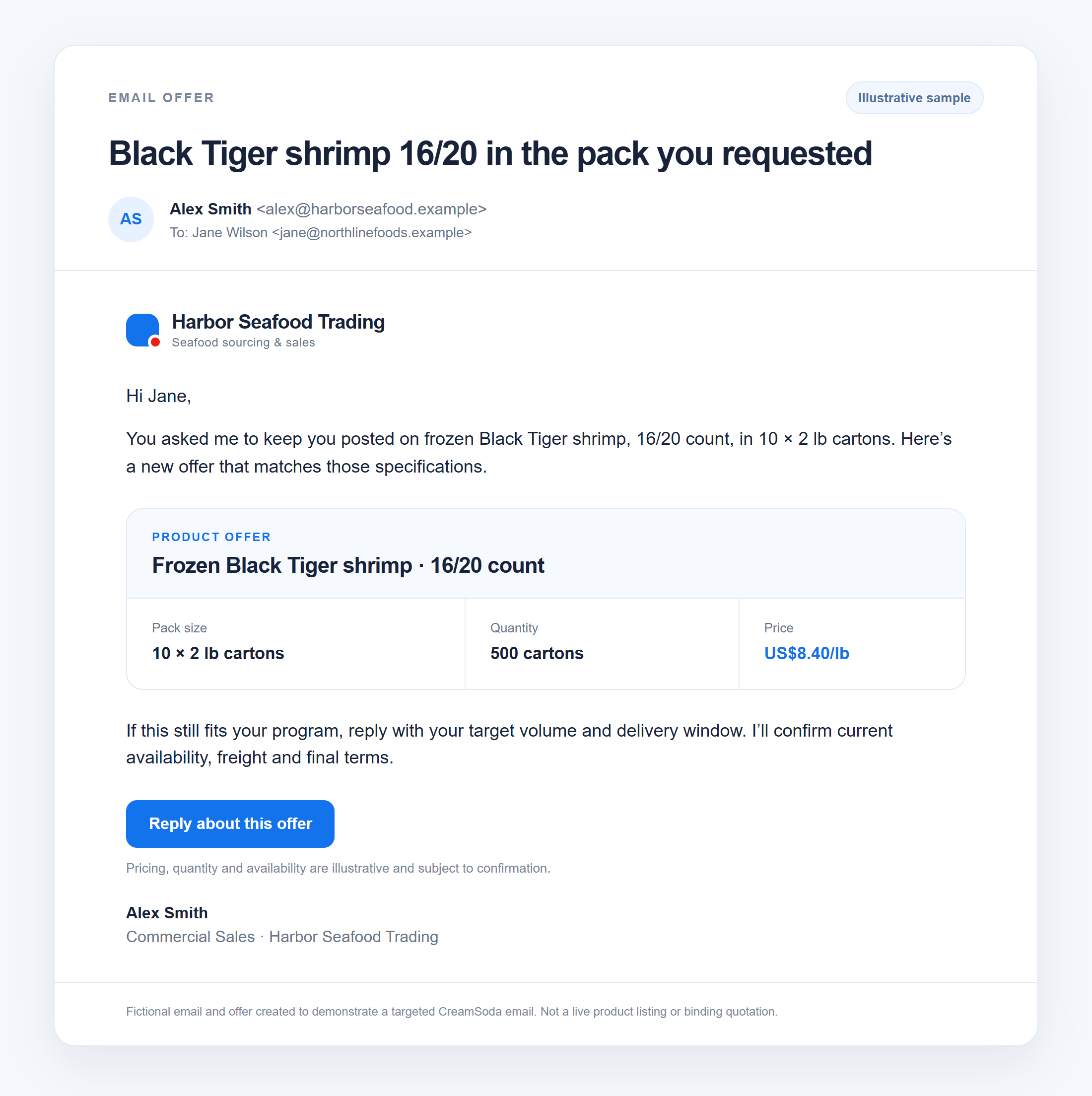
Use product-linked customer records to build a list for this offer.
Share the product and commercial details that matter to that group.
Keep email activity with the contact so the next conversation has context.
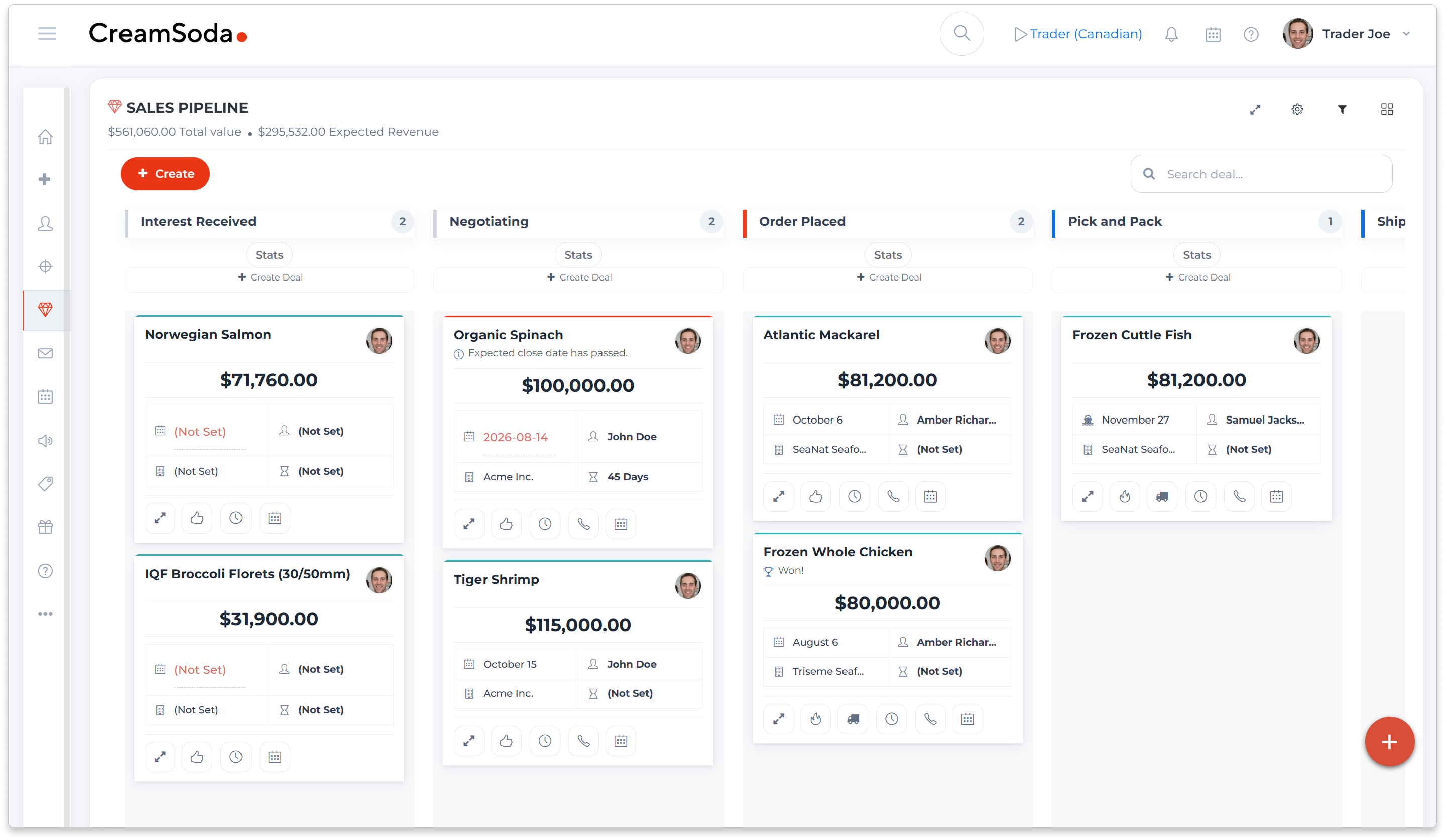
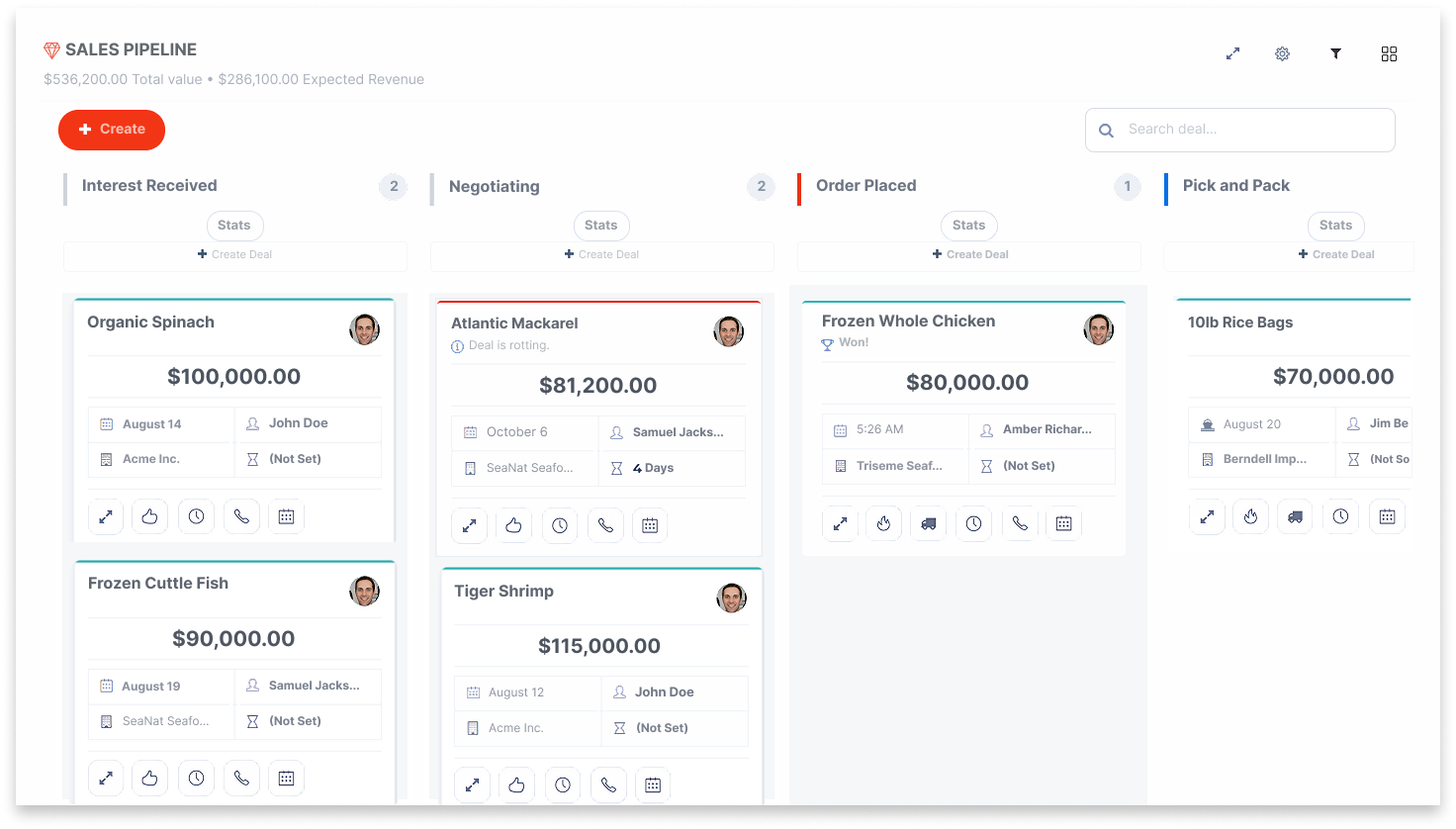
Use a visual pipeline to see open quotes, negotiations and later deal stages.
Set tasks for the team member responsible for follow-up.
Record expected shipment and delivery dates as the transaction progresses.
Add purchasing, freight and other costs as they become known.
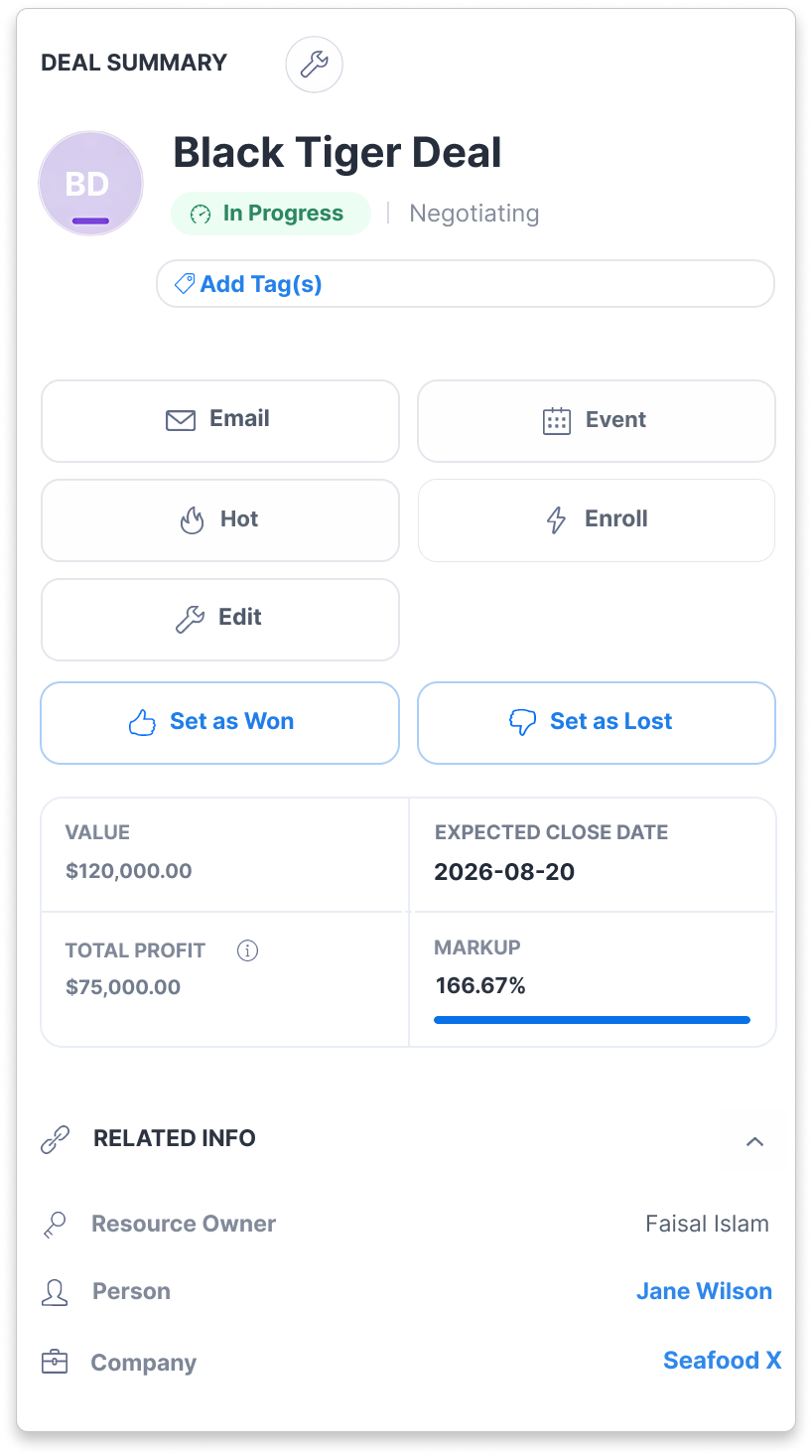
Compare selling value with recorded costs in the deal summary.
Record the issue and assigned value; add a claim amount to costs if it should affect calculated profit.




Use recorded product interests, previous purchases and quotation or offer activity to identify relevant accounts. Review the shortlist before sending a targeted product email.
Yes. CreamSoda lets you record supplier offers with product, quantity, pack and pricing details, then compare prices for the same product using offers available in your account. Check units and terms before making a purchase decision.
Track the owner and stage, assign follow-up, record shipment and delivery dates, and review deal value against recorded costs. Keep the customer conversation and product offer with the deal.
No. CreamSoda supports the commercial sales workflow: supplier offers, customer demand, targeted outreach and deal follow-through. It does not provide live stock counts or replenishment control. You can use it alongside a warehouse or accounting system, but one is not required.